Blog : marketing

Why College Internships Can Be the Secret Sauce for Success at Work

Why College Internships Can Be the Secret Sauce for Success at Work

Nastasia Vasconcells, insight180’s new digital marketing coordinator, shares three ways the practical experience of college internships were instrumental in preparing her for work at insight180. Are internships important? Nastasia offers an emphatic, “Yes, absolutely.” Read about how her on-site internships enhanced her college learning experience better prepared her for her new, full-time position.

READ MORE
How Community Can Enhance Your Business Presence on Social Media

How Community Can Enhance Your Business Presence on Social Media

Personal and professional connections can be powerful forces in promoting your business. People who know you, know what you do and believe in you can be your company’s greatest advocates. With more than two billion users across the globe, social media is one place that professionals, friends and family gather to stay in touch. If you’re not using social media for your business, you may be missing a big opportunity to connect with more people in your business community.

READ MORE

Blogging: Why is it Important to Your Company?

Blogging: Why is it Important to Your Company?

As we work with clients to update their websites, one of the main topics of conversation is about  “the blog.” Do I need one? Why should I have one? How should I do it? Blogging remains one of the important content marketing tools for businesses. You may even be thinking “Isn’t blog writing more important for B2C companies? Why should my B2B company commit to writing blogs?”

READ MORE

Influence Marketing for B2B and Advisory

Influence Marketing for B2B and Advisory

Influence Marketing Is…

Although a potentially “hot topic” in content marketing, Influence marketing has been around since the days of greek curators and royal or celebrity endorsements of soaps and beverages in the late 1800’s. Today, we’d defind Influence Marketing as the act of engaging with current and potential leaders in your industry in order to gain ranks as a leader yourself, to increase meaningful activity on social media platforms, as well as to build your digital (and face-to-face) community of brand advocates.

READ MORE

Building Your Brand One Interaction at a Time

Building Your Brand One Interaction at a Time

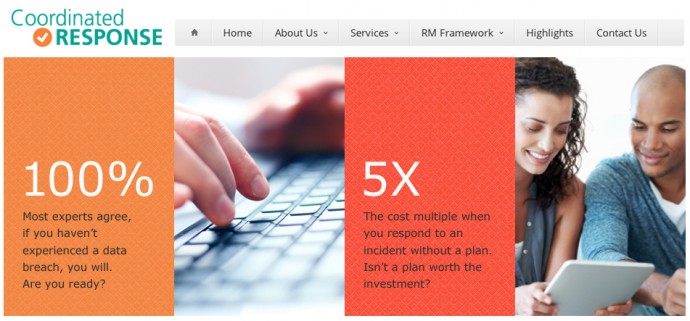
coordinated response website screen shot

Sometimes a gift just falls in your lap (or lands in your email box). As I was contemplating a branding blog post I was working on this morning, I received this email from one of our advisory firm clients. What a pleasure when one’s work is truly appreciated, and even better when the client really “gets” it. There are some really great insights here, and I share with his permission:

Hey, Wendy:

I’m reading a book and insight180 came to mind. The Art of Doing: How Superachievers Do what They Do and How They Do It So Well, by Camille Sweeney & Josh Gosfield. The book features interviews with respected, high profile professionals about how they do what they do. I heard the authors interviewed on two different radio programs during their book tour.

One of those professionals was Tony Hsieh, the CEO of Zappos. He joined the company in its infancy as an investor and now it’s a billion dollar company. One of his 10 principles is: Build your brand one interaction at a time.

“When you think about a brand, you don’t mentally pull up a list of bullet points; you either think ‘I love this company’ or ‘ not’. Ultimately a brand is a short cut to a set of emotions … One of the best branding opportunities is the telephone … We don’t script our reps … If he or she gets the interaction right … the customer is going to remember us for a very long time.”

In the old days, my sales manager called this “belly-to-belly selling.” Face-to-face might be a better term, and today it might be Skype-to-Skype.

As you know, this is the sales model for advisory services — personalized interaction. Yesterday, I had a lunch meeting and I wanted to share how insight180 helped.

Scott Adelman, from

Next Level Technology

READ MORE

Avoiding Marketing’s Shiny Object Syndrome

Avoiding Marketing’s Shiny Object Syndrome

We’ve all experienced it at one time or another – that uncontrollable urge to spend time or money on the latest gizmo, app, online tool, trick or offer. Remember Dug, the adorable talking golden retriever from Pixar Disney’s movie, Up, who in the midst of conversation would become distracted and exclaim, “Squirrel!?” You may chuckle, but Shiny Object Syndrome (SOS) occurs all the time, including in our marketing.

How often have you set out a marketing plan, only to be lured by a special advertising or sponsorship offer that you just can’t refuse (even if it doesn’t truly fit your strategy), or the next app that promises to develop leads, or the next social media outlet that you just can’t “not participate in?”

As branding advisors to advisory firms, consultants and nonprofits that market “the invisible,” we’ve seen it all. And there is so much new in marketing, that sometimes it’s difficult to stay grounded. So we offer some guidelines that will help you stay focused throughout the coming months.

10 Marketing To-Dos to Keep You Focused
  • Remember your brand. Everything in marketing begins with the brand, and stronger brands get results. Having a strong brand means that you have defined your position, are truly different from your competitors, have defined “personality” — expectation even — among your clients and prospects, are consistent in the way you communicate and that your message is relevant and compelling.
  • Become crystal clear on your positioning. This is closely related to number one, but I mention it because so often companies forget to prioritize it. How many times have you been to a website, where you must search for what the company actually does? It should be front and center on your site, business card and in all marketing communications. What do you do of relevance that is different than anyone else? How do you help? What is the emotional benefit you are able to provide to your customer?
  • Know your audience. This also goes hand in hand with number one. But until you have clarity about who your target audience is, you can’t know how to best reach them. Define your ideal client in as detailed a way as you can. Create personas – realistic personality profiles that represent a significant group of this client type – looking not only at demographics, but mindset, attitude, online habits and other traits. This will help you to craft the messages, posts, tweets, emails, etc. to engage your prospects.
  • Have a great business card. Even in the age of online engagement, the business card is still one of your strongest tools. Make a good impression. Provide your essential contact and positioning information.
  • Have a great newsletter. E-newsletters are an effective and convenient way to share industry insights and thought leadership, often the very thing that sets you apart. Even if they are not read through thoroughly, a branded, consistent e-newsletter keeps you top of mind, is track-able and easily shared.
  • Be social. Just as face-to-face networking with your ideal prospects is gold, social media offers additional opportunities. But you have to participate. Don’t just set up a LinkedIn account or Facebook page and disappear. Just like a networking event, you won’t benefit unless you are there, engaging in conversations. In 2012 social media engagement among C-level execs increased dramatically, particularly on LinkedIn. Executives are realizing that social media has the ability to showcase thought leadership and the more human side of the “people in charge;” plus it’s a great avenue for sharing the story of the brand they represent. Beware of SOS (Shiny Object Syndrome) here. There are new platforms and tools to try all the time – Pinterest, Tumblr, Vine, Pheed, Thumb, and a plethora of others. It’s okay to experiment, but not every new tool is right for every business (see nos. 1, 2 and 3).
  • Provide good content. This is about relevance, thought leadership and sometimes . . . entertainment. Your content needs to compel and resonate with your audience. Again, it’s all guided by your brand. But to stay engaged with your audience, you need to provide great information, have an opinion, share something you know your audience will appreciate. Marketers who continue to improve their ability to tell stories and distribute their range of content through social media platforms will gain visibility and build stronger relationships with
  • Optimize the platforms that you have. I can almost guarantee you could do much more with your profile, company page and engagement on LinkedIn, the postings and SEO on your website, and the way you connect and share the communications that you already use. Revisit some of the platform demos, check in with the groups and companies you are following, pose questions in groups, see how you can help to promote your clients, write a guest post for an industry blog or client’s newsletter.
  • Take a different approach. Use the strength and style of the medium in which you are engaged. While LinkedIn is more focused on business information and networking, Facebook is a bit more casual. For example, on your company Facebook page, in addition to posting links to the latest thought leadership on your website, you might also share great articles or book recommendations, exciting employee news and initiatives (i.e. volunteer efforts, big anniversaries, personal achievements). This humanizes a brand. YouTube offers a great opportunity to share a significant event or talk, and can also inform and entertain. While you still want to speak from a brand perspective, these different channels offer opportunities to engage, inspire and delight, while being relevant and steady.
  • Be consistent. Whether you are utilizing traditional marketing vehicles or online social platforms, be more concerned with providing a great experience for your prospects and customers, one that is consistent, engaging and unique to your brand and the emotional connection you wish to create.
  • READ MORE

    Key Words and Tweets and Blogs, Oh My!

    Key Words and Tweets and Blogs, Oh My!

    We are inundated with more than 2000 marketing interruptions per day – whether it be print, radio or TV advertisements, emails we need to sift through despite our filters, banner ads on the websites we visit, billboards we pass on the way in to work. It is a very crowded marketplace and it gets more and more challenging to get your message to your potential customer. So why not allow them to find you more easily? This is the premise of “inbound marketing” – using Google, social media outlets, blogs and other methods to get people to find you. We recommend two excellent books on the topic: Inbound Marketing by Brian Halligan and Dharmesh Shah (founders of Hubspot), and Twitter Marketing: An Hour a Day, by one of our colleagues (and clients) Hollis Thomases, owner of Web Ad.vantage. While the adage “It’s not what you say, it’s what others say about you” is true to a large degree, we would also argue that you had better, indeed, have something substantive to say. You can tweet and blog and reference key search terms ’til the cows come home, but if potential clients land on your website and find little relevant content, a cluttered or crowded site, or an amateur design, you can be sure that they won’t come back. While Halligan and Shah devote a chapter to creating remarkable content, they don’t emphasize enough about the importance of branding and design.

    Digital technology is here to stay and has changed the rules of the marketing game. Organizations have to work harder to reach these fragmented audiences who are already inundated with product, service and marketing clutter. There’s no denying that it’s important to track your marketing progress through hits, clicks and tweets. But even in the digital age, the essential rules of marketing remain – at the end of the day it’s about how people interact with your product or service (dare I say, brand) emotionally. Once your potential client does find you, does the look, feel and content of your landing page welcome them in? Is your brand defined and represented? Does it tell your story, draw them in, make apparent your style, culture or brand personality? These factors are more important than ever. It’s your responsibility to make sure they connect emotionally – that they like what they see, can navigate easily and want to come back again. Remember, how the potential client or consumer feels about a brand will ultimately determine whether they are willing to engage and what price they will pay.

    — Wendy READ MORE

    Marketing ROI.

    Marketing ROI.

    Just read an interesting article in Advertising Age that had my attention. Thought I’d share it and see what you all think.

    In medicine and science, measuring an experiment and the return on its investment is pretty easy. You conduct two identical experiments with only one variable that’s different and measure the results. Whichever provides more of what is desired leads the way for what you do next. The return on investment increases with each piece of knowledge. Its very logical and systematic.

    Is measuring ROI in a marketing campaign similar or different? Can we fairly expect marketing campaigns to be successful without similar control comparisons? The big cahuna’s in advertising do it.

    Well, I think we can and we also can’t. We can, because marketing is about human behavior, which is not as consistent as the responses of an omoeba to a chemical, and because experience in marketing one thing can provide knowledge and guidance in how to market other things.

    But we also can’t expect marketing campaigns to be successful without control comparisons because measuring marketing ROI can only be fully successful when it is objective and based on the numbers. Am I suggesting that companies should start running simultaneous marketing campaigns to essentially have them compete with each other? Maybe. The data would be invaluable, but, admittedly, it would be out of most company’s financial range to do so. On the other hand, wouldn’t the information learned save a good deal of money for years down the road?

    What do you think?

    Here’s the full article: http://adage.com/cmostrategy/article?article_id=137521

    -Chris READ MORE