Blog : branding

Focusing the Lens: Your Business Name Story

Focusing the Lens: Your Business Name Story

Choosing a name for your business is one of the most important decisions you will make. Regardless of your industry, it needs to make an impression. Be memorable. Maybe have a little something to do with what you do. You might want it to be somewhat catchy or clever. Regardless of the vibe, what’s most important is that you are able to craft a narrative around your name that resonates with your identity, connects with your audience, and stands the test of time. At insight180, we understand the power of a name because we’ve been helping to name businesses, processes, and events for more than 20 years.

READ MORE
How to Keep Your WordPress Website Safe

How to Keep Your WordPress Website Safe

October is Cyber Security Awareness Month and what better way to acknowledge it than by brushing up on your WordPress security best practices?! After all, you’ve put a lot of time, energy, and money into your website over the years. Don’t you think it’s worth protecting? Here are five best practices for keeping your WordPress website safe from hackers.

READ MORE

Six Easy Steps For a Website Refresh

Six Easy Steps For a Website Refresh

In the ever-changing business landscape, a brand refresh can be a powerful tool for staying relevant and connecting with your audience. By embracing change, fine tuning your unique brand essence, engaging stakeholders, crafting a compelling story, and updating your visual identity, you can reestablish meaningful connections with your most important stakeholders.

READ MORE

Savoring Simplicity

Savoring Simplicity

In the ever-changing business landscape, a brand refresh can be a powerful tool for staying relevant and connecting with your audience. By embracing change, fine tuning your unique brand essence, engaging stakeholders, crafting a compelling story, and updating your visual identity, you can reestablish meaningful connections with your most important stakeholders.

READ MORE

Embracing Change: The Power of a Brand Refresh

Embracing Change: The Power of a Brand Refresh

In the ever-changing business landscape, a brand refresh can be a powerful tool for staying relevant and connecting with your audience. By embracing change, fine tuning your unique brand essence, engaging stakeholders, crafting a compelling story, and updating your visual identity, you can reestablish meaningful connections with your most important stakeholders.

READ MORE

Time For A Brand Refresh?

Time For A Brand Refresh?

A brand refresh is one of the easiest and most effective ways to add new life to your brand – as well as new relevance in the eyes of your clients, customers, and prospects.

What exactly is a brand refresh?

In simplest terms, think of a brand refresh as a makeover, update, or renovation of your organization’s image, while maintaining its core identity and positioning strategy. It is not a complete overhaul of your company (even though that can be a tempting option), but more like a reimagining to break free from outdated perceptions or old ways of communicating with your audiences.

While it usually centers on an updated visual identity, a brand refresh can also affect company culture, processes, and offerings, and go a long way toward breathing new life into employee morale and performance. A refresh can’t solve deep-seated issues like core values misalignment, broken processes,  or major shifts in an organization’s positioning — that would be a much more extensive rebranding – but it can:

  • Preserve and reinforce your brand’s existing integrity
  • Infuse new energy into the business
  • Ensure your company image keeps current in a changing marketplace
  • Improve customer retention
  • Create buzz and expand your reach
  • Attract top talent

If it’s been a decade (or more) since you’ve refreshed your brand, it’s time to take a look. Is your brand image and messaging standing out within your industry? Does it work in your marketing presentations and on LinkedIn? Social media has changed the way we communicate and opened up so many opportunities for businesses to reach very targeted audiences. Does your brand make the kind of visual impact you want it to?

While still a really important organizational decision, a brand refresh requires less risk than a complete brand overhaul and can provide some very positive outcomes. You might argue that you already have a strong logo that works well, and besides, your clients and prospects know it. But how well is it really serving you? Have you become outdated? Often a refresh can be the thing that gets clients and prospects interested again. It can provide an opportunity to retell your story, share exciting changes, and reconnect with longtime customers (and their newer employees and partners).

How do you know when it’s the right time to refresh your brand? 

READ MORE

Branding, Differentiation, Corporate Identity, and Positioning Defined

Branding, Differentiation, Corporate Identity, and Positioning Defined

Last updated April 17, 2023.

Corporate Identity. Differentiation. Branding. Positioning. Even among the business savvy, it’s not at all uncommon for these marketing terms to be used almost interchangeably. In fact, they are quite different and play very different roles in business development and marketing. We thought it was time to revisit the terms and clarify the differences, so you can be better-informed about marketing, design, and branding services.

First, What is a Brand?

A brand is the idea behind a company’s identity, the impression people have of you. A brand is what you stand for, believe in, behave like, and how you are perceived by those that conduct business with you or otherwise experience interaction with you. It’s the collective sum of who you are as an organization and how you communicate your value and culture in a variety of ways.

A brand takes time to build because it’s defined by what others think about you, and such impressions (be they positive or negative) take time to form and build.

“A brand is a person’s gut feeling about a product, service, or organization. A brand is a person’s gut feeling, because brands are defined by individuals – not companies or markets. A brand is a gut feeling because people are emotional, intuitive beings. A brand is not what you say it is, it’s what they say it is.” — Marty Neumeier, author

Corporate Identity

Corporate identity is how a company or organization presents itself to the public. It’s the intentional image and aesthetic that is created to help form its public image. Think logo – an image that is both a recognizable mark, symbol, or icon plus a specific type treatment – and colors, tagline, or definition statement of an organization. A corporate identity includes the key visual and verbal elements that work together to create a definitive, consistent, and recognized persona for the business. It should represent the key ingredients of a brand but ultimately it serves to identify, not explain or sell.

Differentiation

What differentiates you is not your logo, tagline, slogan, or what your website looks like. Your differentiation is what you offer or do that sets you apart from other organizations that are similar to you. For professional services businesses, which is our area of specialization, it can be a minor characteristic that a company embraces as its signature difference. Without an obvious or expressed and declared differentiation, it can be difficult for potential customers to detect how you are different and even harder for them to choose you as their preference.

Branding

Branding is the strategy behind corporate identity and brand, as well as the process that ensures they are representative of who you are — the why, what, and how of your organization. It’s as deep as the core values and as detailed as crafting messages and communications materials that will help to form the impressions people will have about your company. It is also the implementation of consistently applied communications that express who your company is at its core. Branding is rarely a destination. It is nearly always an ongoing process that evolves as a company evolves and grows.

Positioning

Positioning refers to where you stack up within your industry, relative to your competitors and in the eyes of your customers. Branders like us use positioning strategy as a way to tell customers what you do, for whom,, how you help, and how you are different. Your differentiation (see above) is a function of your positioning strategy. If you know how you can help and how you are different, you can tell potential customers what your position in the industry is relative to them. This is very helpful information for customers to have. It’s one of the key ways they evaluate you; customers will assign a position to you in their minds even if you don’t tell them your thoughts on the matter.

Bringing it all together

READ MORE

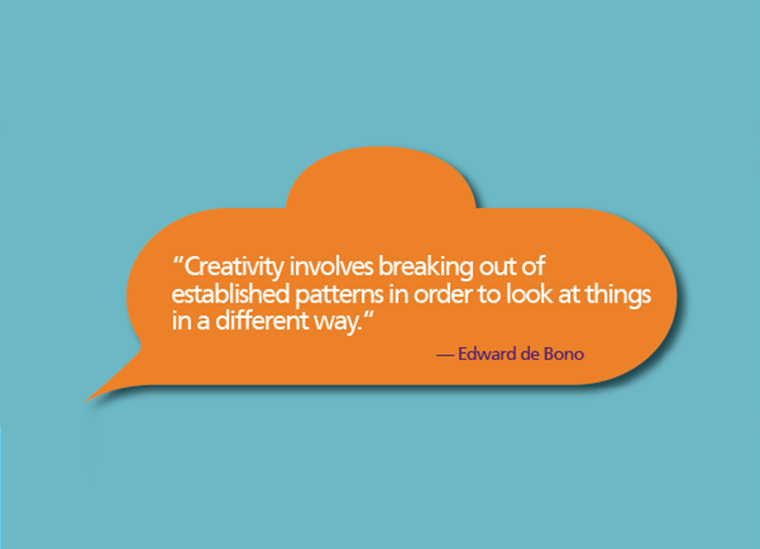
Breaking Patterns to Create a Meaningful Brand Name

Breaking Patterns to Create a Meaningful Brand Name

Ah, naming!

One of our favorite tasks here at insight180 . . . . most of the time. Naming and rebranding in the wrong hands, however, can be detrimental, even disastrous. How can you be sure not to undermine the process and come up with a successful name for your advisory service business, nonprofit business or brand extension?

We’ve shared some naming guidelines with our readers in a previous post and we’ve given workshops on naming and rebranding. Last month we shared a post about a very important but tough-to-explain aspect of naming called Mouthfeel. This month we back up a bit to look at some of the whys and hows of the naming process.

What are the most important steps in creating a name? 1) Know yourself (and your organization), 2) know why you are renaming, 3) know how you are different and better, and finally and probably most important, 4) be open to some new thinking.

We are often approached by companies who are ready to rebrand, with a litany of stipulations about a potential new name.

“It must be memorable and it has to explain what we do, but we don’t want the name to be too long. . . “

READ MORE

Distinguishing Your Brand: The Power of Purpose

Distinguishing Your Brand: The Power of Purpose

If it is your job to differentiate and grow your business, you own a tall task—especially in this environment of information overload, when all of us are overwhelmed with new platforms, media channels and ways to get noticed.

Trust in companies and institutions has plummeted over the last two decades. At the same time, the number of choices in the marketplace has skyrocketed. With so many options, a growing number of consumers are examining the greater meaning of their purchases and affiliations. What is the story behind the company? What is their carbon footprint? How do they impact their local and global communities? How do they treat their employees? Does the organization’s values reflect my own? What contribution are they making in the world?

More and more creative entrepreneurs, frustrated GenXers to Millennials and corporate-tired Baby Boomers are searching for more meaning, creating businesses on their own terms, and doing things differently, well, because they can. They are finding their tribes, where purpose and meaning are resonating more than ever.

Just as information and technology superseded manufacturing as the core of innovation and economic growth, we are entering the age of the “Purpose Economy,” according to author Aaron Hurst (and others), where purpose and mission will become the new currency of value creation. I’ve certainly felt it. Have you?

Conscious capitalists and purpose-driven brands like Whole Foods, IKEA, Costco and Zappos are laser-focused on delivering meaning to their customers, employees and stakeholders. They understand, according to Hurst, “that to build loyalty and value they need to play a core role in all three areas of meaning creation for their stakeholders: relationships, impact and growth.”

The book Firms of Endearment: How World-Class Companies Profit from Passion and Purpose, shows how some of today’s best companies “get it.” They go beyond corporate social responsibility and aligning stakeholders’ interests in making the world a better place. These companies are becoming the ultimate value creators. “They’re generating every form of value that matters: emotional, experiential, social, and financial. And they’re doing it for all their stakeholders. Not because it’s ‘politically correct’ but “because it’s the only path to long-term competitive advantage.”  They are helping to address this desire for meaning, making a profit and having fun doing it.

If you want to compel people to choose your brand and attract today’s workforce, you need to stand for something more meaningful than simply ‘selling stuff to make money.’

Today, more than ever, successful branding is not just what you as an organization (or solopreneur) claim it to be, it must align with your core values and culture as well as the greater impact you have in your community. We all know that your brand is not what you say it is, but it’s what your stakeholders feel about you. It must authentically shine through in your visual identity, marketing and customer service practices. But it’s far more intricate than that.

Branding is about knowing what you stand for and how you convey the values and character of your product or service. Your brand helps facilitate your relationships, which, in turn, facilitate your business. So you must be crystal clear in how you communicate that brand.

Oh, yes, and you have about three seconds, if you’re lucky to make a first impression. [According to a recent Google study, it takes only 17 milliseconds to form a first impression about a website. With a fraction of a second to make an impact, brand consistency is key. So whether that point of introduction is Facebook, LinkedIn, your website, Instagram, an exhibit opportunity, whatever—clearly, compelling visuals are vital to an organization’s brand. But that’s a topic for another post.]

Here’s what we recommend stay top of mind when communicating your brand message:

1.     Keep it simple.

READ MORE