Blog : branding

Fun Finds

Fun Finds

So much has changed in the past year. New things are catching our eye. The insight180 team has once again gathered a few design-inspired items that capture some of the movements and moments of today. From Disney World and the Olympic logos to generational aging trends and post-pandemic design trends, we hope these creative “finds” bring you some enjoyment and inspiration. What’s something you’ve been noticing?

READ MORE
7 TIPS TO HELP CLARIFY YOUR BRAND (AND WHY IT MATTERS)

7 TIPS TO HELP CLARIFY YOUR BRAND (AND WHY IT MATTERS)

As a business owner, you already know that to serve your clients best, you must first understand them. Chances are, you do. You’ve crunched the numbers, analyzed the data, and modified your products or services time and time again to get them exactly where you need them to be. Or, rather, you’ve refined your services to specifically meet the needs of your clients.

READ MORE
How to Avoid Buyer’s Remorse with Your Brand Refresh

How to Avoid Buyer’s Remorse with Your Brand Refresh

Years ago, I bought a new-to-me car. When we arrived at the dealer to pick it up, they were ready. The car was spotless. Workers gave balloons to our young sons and shook hands with my husband and me. A few days later, we received a “Welcome to the Family” card in the mail, congratulating us on our auto selection and inviting us to join the fan club – complete with a tin of cookies! Surely, there could be no doubt that we made a smart purchasing decision.

READ MORE

Just a little more white space, please.

Just a little more white space, please.

I’ve been wanting to write this blog for a long time. It’s been on my list for months… no years. It’s taken many forms and had a few false starts. Sometimes spurred by a client who wants to fill every inch of the page in their annual report, or use every millimeter in an ad or when their logo must contain specific, literal elements to help visually describe their business. Sigh

READ MORE

How to get started on Instagram for your B2B

How to get started on Instagram for your B2B

Owned by Facebook since 2012, Instagram is the most visual social media platform. It’s quickly growing into one of the most used (and liked) platforms, with 500 million daily active users. Many business-to-consumer (B2C) companies, like Starbucks, famously use Instagram to highlight their products, values and special promotions. By creating on-brand, visually appealing posts, Starbucks has created a following based around their products.

READ MORE
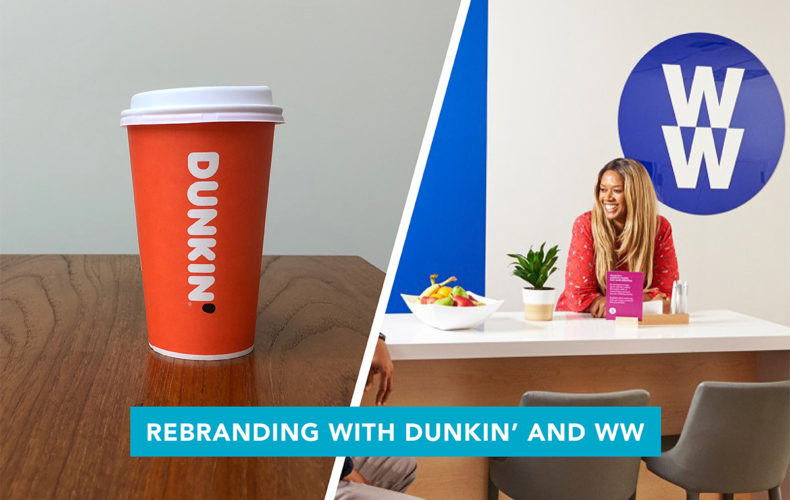
Who Wins the Dunkin-WW Rebrand Smackdown?

Who Wins the Dunkin-WW Rebrand Smackdown?

As branders, we love watching brands evolve, grow and take charge. How a rebrand unfolds, and the reasons behind it, is intriguing at least. And done well, a rebrand can make a big difference in fan loyalty and market share. Two very popular consumer brands officially announced brand updates within days of each other, and while “rebrand smackdown” may be a slightly exaggerated way to refer to it, we think it could be fun to compare notes for these two established, consumer-facing brands.

So, why would two-decades-old companies like Dunkin’ Donuts — now Dunkin’ — and Weight Watchers — now WW — choose to rebrand? And what effects will their rebrand mean to their loyal and prospective customers? READ MORE

Is Fear of Change Holding You Back?

Is Fear of Change Holding You Back?


You are not alone.

American entrepreneurs may have a well-earned reputation for risk taking, but once we have a modicum of success, we tend to turn into a timid bunch—or maybe the better term is reluctant. We’ve figured out what works on our own for initial growth, so we start relying on that status quo experience, often refusing to recognize changes appearing on the horizon, reluctant to see what’s right in front of us.

“The only constant is change.”  —Heraclitus

As brand advisors to consultants, professional service firms, nonprofits and other advisory firms, we often see the fear of change take hold in our clients. Where we see it most is when we’re addressing brand—brand name, brand identity and positioning strategy (learn more about the difference between these marketing terms here). While so many CEOs are ready to take risks in hiring or launching new products and services, many are quick to dismiss the value that a re-brand could offer. They feel themselves tied to the “brand recognition” they think they have, limiting their opportunity for growth. The problem is this: when making decisions, many of us focus only on what we have to lose rather than all that we could potentially gain.

And heck, it’s scary. Change is scary. Loss is scary. Our brains work hard to fight change; plus our habits, which have helped us succeed so far, are powerful and efficient (read more in this great Forbes article). You’ve worked hard to establish a reputation and grow. But what are you missing out on by not taking a closer look—or an objective look of what you might gain?

“To improve is to change; to be perfect is to change often.” – Winston Churchill 

I write this blog post as I’m thinking about several of our clients who are in the midst of great change. One in particular, with whom we still work today, swore almost a decade ago that he would never change his business name, but upon closer examination (via a 180 Positioning Workshop™), not only changed it, but changed his business model, developed a spin-off company, rebranded both and subsequently grew six times over in four years.

He called me today for some advice on refreshing the spin-off company and said, “I will always remember what you said during our workshop when I was so worried about our brand equity. . . you said, ‘right now, nobody knows who you are.’ And you were right! We were afraid to change.”

While my words may have sounded harsh, he needed to hear them. He and his staff had already gotten so involved in their routines that they didn’t realize how much further they could go.

What our exploration did fundamentally, was enable him to focus more on all the possibilities and potential gain that a change would offer versus the loss of his “brand recognition.”

This name change and rebrand ultimately allowed his entire team to regroup and speak from the same set of brand values. It helped differentiate the company in the marketplace and brought a new pride to the team. Sharing that new life, that new story, became part of the excitement now shared among all of the staff, clients, and prospects, which created more excitement within the industry. When done correctly, a rebrand can be the event that breathes new life into an organization, reassures existing clients and helps attract new ones.

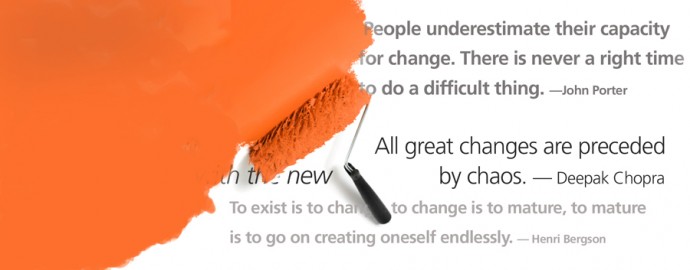
“People underestimate their capacity for change. There is never a right time to do a difficult thing.” – John Porter

When seeing change in terms of what you have to lose, your focus is on staying safe, avoiding mistakes, fulfilling responsibilities—all honorable pursuits—you’re hanging on to what you’ve got and that’s okay, but it likely won’t help you grow.

If, instead, you see change in terms of what you might gain, your focus is about moving forward, maximizing potential, and reaping the rewards. It may require more of a leap of faith, but it’s also about creating opportunities for success.

Neither approach is wrong. However, the latter is an approach that can energize an organization and propel it forward.

So how can you learn to embrace change for the sake of your future happiness, particularly when it feels risky or uncertain? The answer is surprisingly simple: when you think about making a change, focus only on what you have to gain, and let go of those thoughts of what you might lose. To find out if

it’s time for a brand refresh, read more

READ MORE

Building Your Brand One Interaction at a Time

Building Your Brand One Interaction at a Time

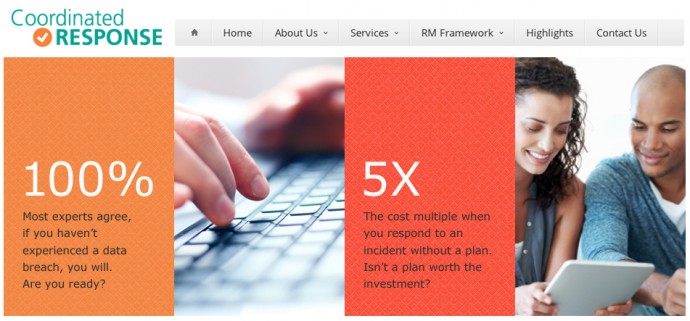
coordinated response website screen shot

Sometimes a gift just falls in your lap (or lands in your email box). As I was contemplating a branding blog post I was working on this morning, I received this email from one of our advisory firm clients. What a pleasure when one’s work is truly appreciated, and even better when the client really “gets” it. There are some really great insights here, and I share with his permission:

Hey, Wendy:

I’m reading a book and insight180 came to mind. The Art of Doing: How Superachievers Do what They Do and How They Do It So Well, by Camille Sweeney & Josh Gosfield. The book features interviews with respected, high profile professionals about how they do what they do. I heard the authors interviewed on two different radio programs during their book tour.

One of those professionals was Tony Hsieh, the CEO of Zappos. He joined the company in its infancy as an investor and now it’s a billion dollar company. One of his 10 principles is: Build your brand one interaction at a time.

“When you think about a brand, you don’t mentally pull up a list of bullet points; you either think ‘I love this company’ or ‘ not’. Ultimately a brand is a short cut to a set of emotions … One of the best branding opportunities is the telephone … We don’t script our reps … If he or she gets the interaction right … the customer is going to remember us for a very long time.”

In the old days, my sales manager called this “belly-to-belly selling.” Face-to-face might be a better term, and today it might be Skype-to-Skype.

As you know, this is the sales model for advisory services — personalized interaction. Yesterday, I had a lunch meeting and I wanted to share how insight180 helped.

Scott Adelman, from

Next Level Technology

READ MORE

Avoiding Marketing’s Shiny Object Syndrome

Avoiding Marketing’s Shiny Object Syndrome

We’ve all experienced it at one time or another – that uncontrollable urge to spend time or money on the latest gizmo, app, online tool, trick or offer. Remember Dug, the adorable talking golden retriever from Pixar Disney’s movie, Up, who in the midst of conversation would become distracted and exclaim, “Squirrel!?” You may chuckle, but Shiny Object Syndrome (SOS) occurs all the time, including in our marketing.

How often have you set out a marketing plan, only to be lured by a special advertising or sponsorship offer that you just can’t refuse (even if it doesn’t truly fit your strategy), or the next app that promises to develop leads, or the next social media outlet that you just can’t “not participate in?”

As branding advisors to advisory firms, consultants and nonprofits that market “the invisible,” we’ve seen it all. And there is so much new in marketing, that sometimes it’s difficult to stay grounded. So we offer some guidelines that will help you stay focused throughout the coming months.

10 Marketing To-Dos to Keep You Focused
  • Remember your brand. Everything in marketing begins with the brand, and stronger brands get results. Having a strong brand means that you have defined your position, are truly different from your competitors, have defined “personality” — expectation even — among your clients and prospects, are consistent in the way you communicate and that your message is relevant and compelling.
  • Become crystal clear on your positioning. This is closely related to number one, but I mention it because so often companies forget to prioritize it. How many times have you been to a website, where you must search for what the company actually does? It should be front and center on your site, business card and in all marketing communications. What do you do of relevance that is different than anyone else? How do you help? What is the emotional benefit you are able to provide to your customer?
  • Know your audience. This also goes hand in hand with number one. But until you have clarity about who your target audience is, you can’t know how to best reach them. Define your ideal client in as detailed a way as you can. Create personas – realistic personality profiles that represent a significant group of this client type – looking not only at demographics, but mindset, attitude, online habits and other traits. This will help you to craft the messages, posts, tweets, emails, etc. to engage your prospects.
  • Have a great business card. Even in the age of online engagement, the business card is still one of your strongest tools. Make a good impression. Provide your essential contact and positioning information.
  • Have a great newsletter. E-newsletters are an effective and convenient way to share industry insights and thought leadership, often the very thing that sets you apart. Even if they are not read through thoroughly, a branded, consistent e-newsletter keeps you top of mind, is track-able and easily shared.
  • Be social. Just as face-to-face networking with your ideal prospects is gold, social media offers additional opportunities. But you have to participate. Don’t just set up a LinkedIn account or Facebook page and disappear. Just like a networking event, you won’t benefit unless you are there, engaging in conversations. In 2012 social media engagement among C-level execs increased dramatically, particularly on LinkedIn. Executives are realizing that social media has the ability to showcase thought leadership and the more human side of the “people in charge;” plus it’s a great avenue for sharing the story of the brand they represent. Beware of SOS (Shiny Object Syndrome) here. There are new platforms and tools to try all the time – Pinterest, Tumblr, Vine, Pheed, Thumb, and a plethora of others. It’s okay to experiment, but not every new tool is right for every business (see nos. 1, 2 and 3).
  • Provide good content. This is about relevance, thought leadership and sometimes . . . entertainment. Your content needs to compel and resonate with your audience. Again, it’s all guided by your brand. But to stay engaged with your audience, you need to provide great information, have an opinion, share something you know your audience will appreciate. Marketers who continue to improve their ability to tell stories and distribute their range of content through social media platforms will gain visibility and build stronger relationships with
  • Optimize the platforms that you have. I can almost guarantee you could do much more with your profile, company page and engagement on LinkedIn, the postings and SEO on your website, and the way you connect and share the communications that you already use. Revisit some of the platform demos, check in with the groups and companies you are following, pose questions in groups, see how you can help to promote your clients, write a guest post for an industry blog or client’s newsletter.
  • Take a different approach. Use the strength and style of the medium in which you are engaged. While LinkedIn is more focused on business information and networking, Facebook is a bit more casual. For example, on your company Facebook page, in addition to posting links to the latest thought leadership on your website, you might also share great articles or book recommendations, exciting employee news and initiatives (i.e. volunteer efforts, big anniversaries, personal achievements). This humanizes a brand. YouTube offers a great opportunity to share a significant event or talk, and can also inform and entertain. While you still want to speak from a brand perspective, these different channels offer opportunities to engage, inspire and delight, while being relevant and steady.
  • Be consistent. Whether you are utilizing traditional marketing vehicles or online social platforms, be more concerned with providing a great experience for your prospects and customers, one that is consistent, engaging and unique to your brand and the emotional connection you wish to create.
  • READ MORE